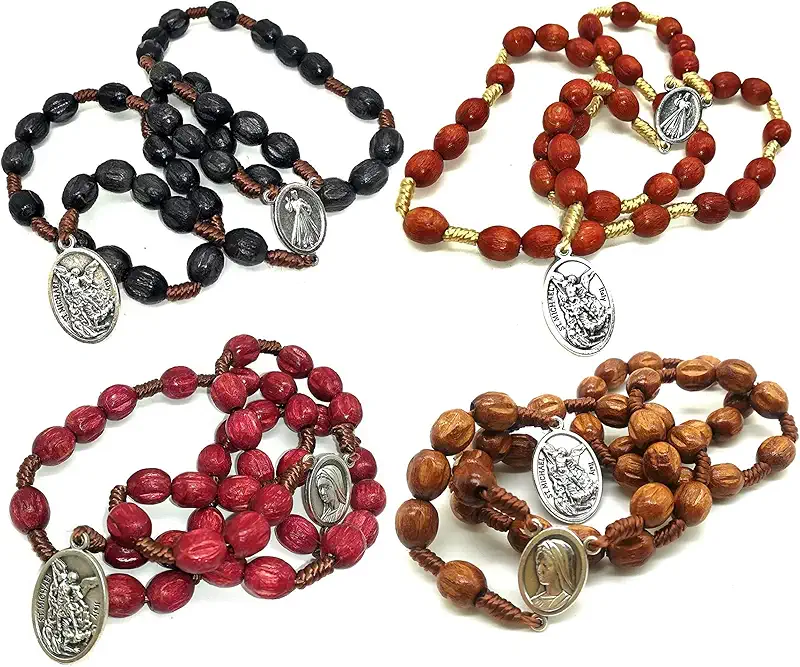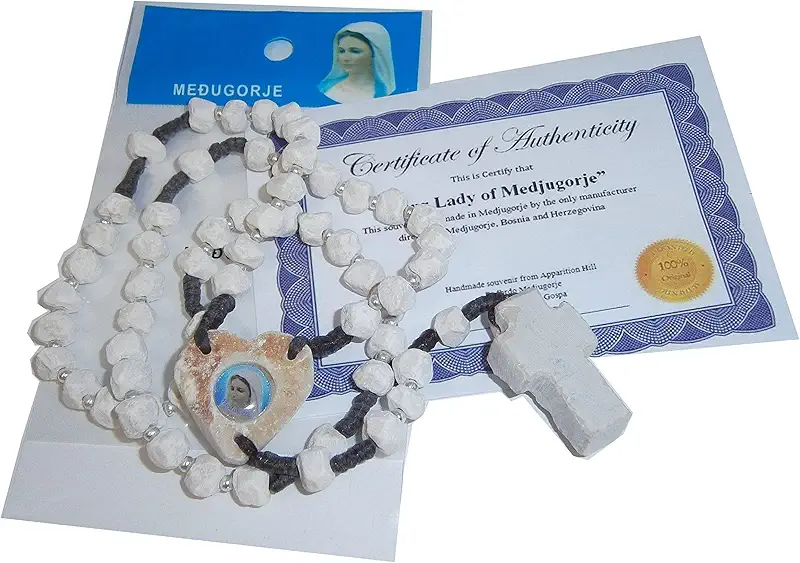
When people talk about Medjugorje, they often speak of peace, confession, and the desire to come closer to God in everyday life. A Medjugorje Bracelet, in its simplest form, is just a little band on the wrist. Yet, for many of us, it quietly reminds us of prayer, of Our Lady, and of times when we tried to begin again with more honesty and trust.
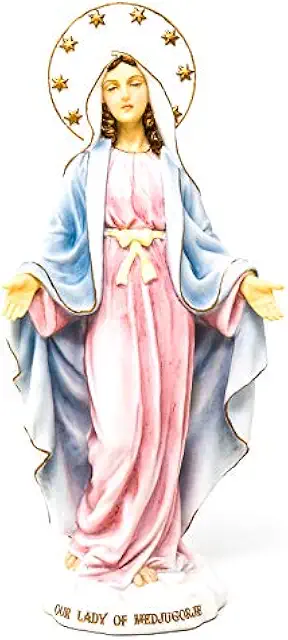
Over the years, Medjugorje bracelets have taken many shapes: simple cord bracelets with knots for each Hail Mary, small medals or images woven into a band, or more traditional chain bracelets with tiny charms. No matter the style, they often share the same heart: they are meant to be worn, touched, and used as a gentle reminder that faith is not just for church or special trips, but for regular mornings and long workdays.
I still remember the first time I received a Medjugorje Bracelet from a friend who had gone on pilgrimage. It was not expensive or fancy. The cord was slightly rough, and the colors were simple. But when they placed it in my hand and said, “I prayed for you there,” I felt something very quiet but very real. To this day, when I run my fingers over the knots or the little medal, I think of that promise of prayer and the way God works through small gestures.
What makes a Medjugorje Bracelet different
Many Catholics wear rosary bracelets, saint medals, or crosses. A Medjugorje Bracelet often carries a special link to that particular town and its long lines for confession, evening rosary, and silent walks up the hills. People who have been there sometimes describe it as a place where they finally stopped rushing and sat with their conscience in front of God.
A bracelet from there can bring those memories into daily routines. For someone who has visited, it may recall standing in a packed church, waiting for confession, or praying the rosary late into the evening. For someone who has never been, the bracelet can simply symbolize a desire to live more honestly before God, to pray more regularly, and to let Mary walk alongside them in ordinary struggles.
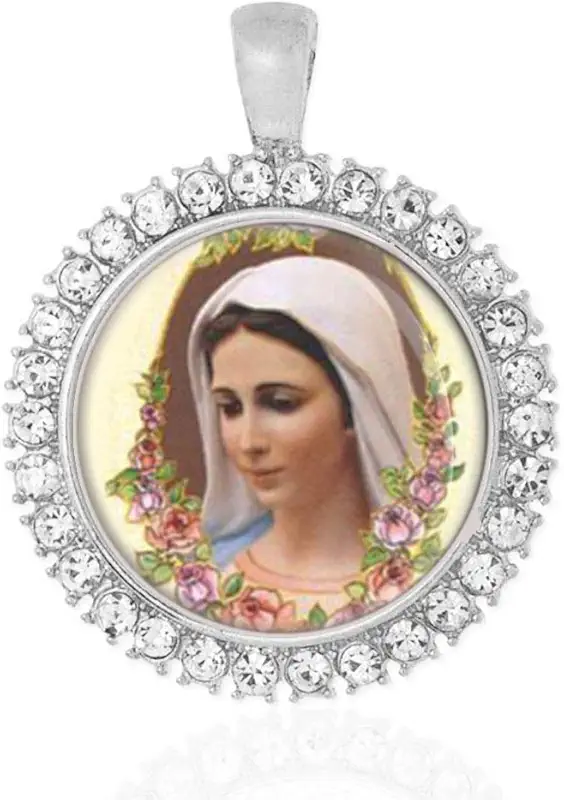
Some Medjugorje bracelets include small depictions of Our Lady, the cross, or the word “Mir” (peace). Others are completely simple, just a band with knots. Both can be meaningful. Sometimes the plain ones are easier to wear at work or in settings where you might not want to draw attention. The important thing is not the design itself, but the quiet intention in your heart when you put it on in the morning or touch it during the day.
Wearing a Medjugorje Bracelet in everyday life
Most of us live busy lives: kids, work, responsibilities, appointments. Prayer easily slips to the bottom of the list. A Medjugorje Bracelet does not fix that on its own, but it can help anchor small habits. For example, you might decide that each time you notice the bracelet on your wrist, you will say a short prayer: “Mary, help me,” or “Jesus, have mercy,” or even a simple “Thank you.” These are not magic formulas, just little nudges that bring God back into the middle of the day.
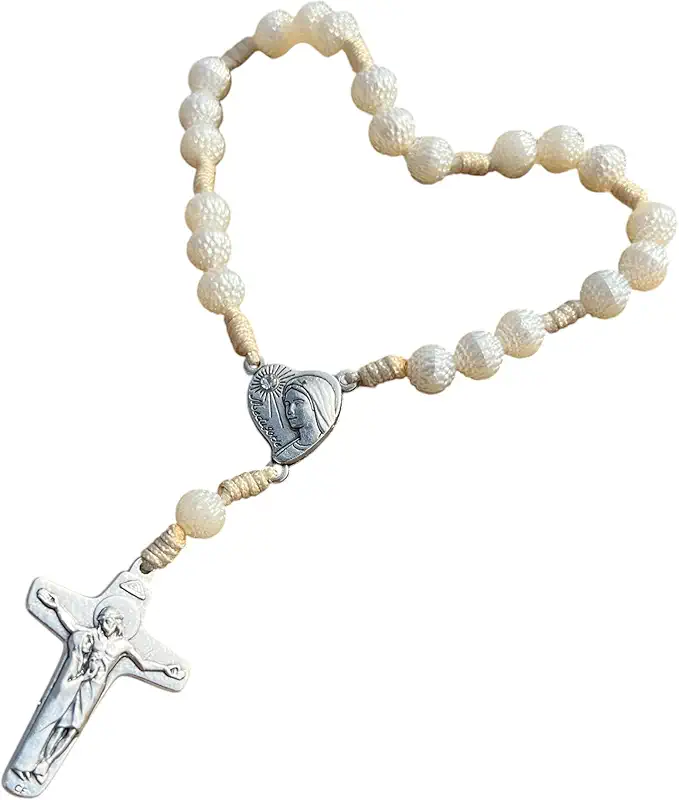
Some people use the knots or beads on the bracelet as a small chaplet, especially when they are waiting in line or sitting on a bus. You can pray a decade of the rosary slowly with your fingers, one Hail Mary for each knot. In a sense, the bracelet becomes a hidden rosary that you carry wherever you go, without needing to take anything out of your pocket or bag.
I have found that when I am stressed or distracted, just holding my Medjugorje Bracelet for a moment can help me refocus. It is not about feelings; sometimes I still feel dry, tired, or irritated. But the simple act of reaching for the bracelet reminds me that I am not alone, that God has been faithful in the past, and that Mary continues to watch over us, even when we do not notice.
Different styles of Medjugorje Bracelets
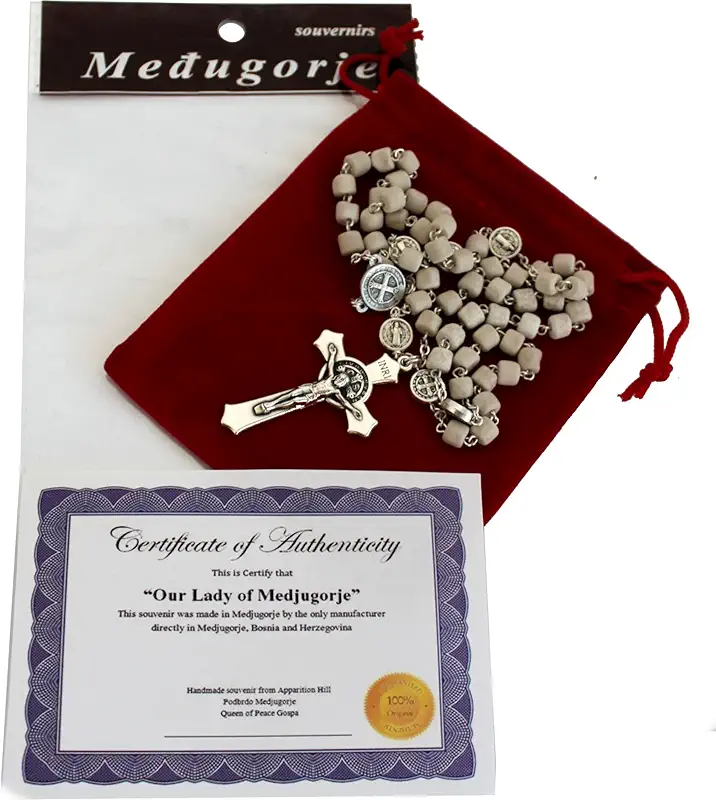
You will find many different styles of Medjugorje bracelets. Some are simple cord bracelets in earthy colors, like brown, beige, or dark green. These often use macramé or basic knots to create a firm band that adjusts easily to the wrist. They are sturdy enough for everyday wear and can handle normal activities without much concern.
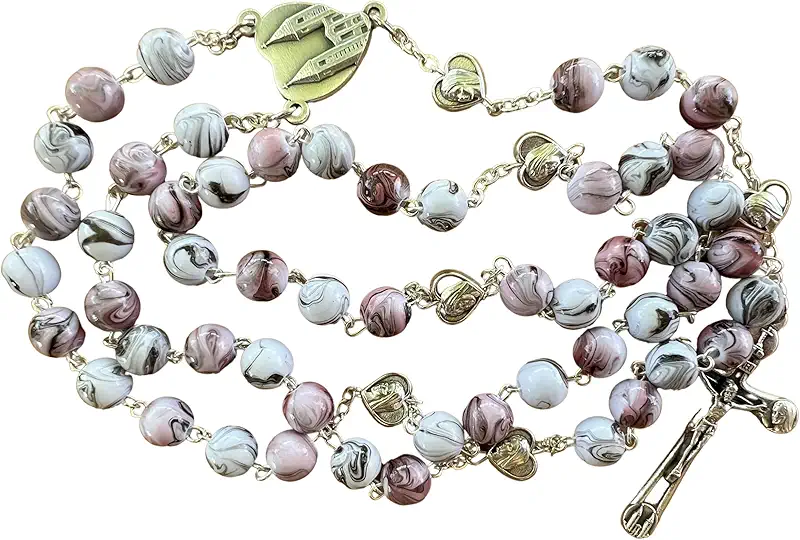
Other styles use beads, sometimes made of wood, glass, or stone. Wooden beads can feel very traditional and natural, almost like holding a small piece of a rosary. Glass beads may carry colors associated with Marian devotion, like blue and white. Stone beads can symbolize stability and permanence, reminding us that our faith is meant to endure through ups and downs.
Then there are bracelets with multiple small images or medals woven into the band: perhaps tiny pictures of Our Lady of Medjugorje, the cross, the Sacred Heart, or saints mentioned often at pilgrim sites. These can become a sort of miniature “journey” around the wrist, each image recalling a different aspect of faith. Some people like these because they can quietly choose which image to touch and reflect on at a given moment.
I once received a braided Medjugorje Bracelet with the word “Mir” woven into the design. At the time, my life felt anything but peaceful. Work was intense, family worries were heavy, and prayer felt dry. I did not suddenly feel calm because of the bracelet. But seeing that simple word, “peace,” sitting on my wrist throughout the day nudged me to breathe, to remember that God sees the whole picture, and to ask Mary quietly for help instead of trying to control everything on my own.
Using a Medjugorje Bracelet for prayer
A Medjugorje Bracelet is not a requirement for prayer, and it does not replace the sacraments or the rosary. It is simply one more tool that can help you stay focused and faithful in small daily ways. Here are some gentle suggestions that many people have found helpful over time.
1. Beginning and ending the day
In the morning, when you fasten the bracelet around your wrist, you can offer a short prayer such as, “Lord, I give this day to you,” or “Mary, walk with me today.” At night, you might take a moment to touch the bracelet and thank God for specific moments of the day, even if they were small: a kind word, a quiet moment, or the strength to get through a hard conversation.
2. Short prayers during stress
Many people carry tension in their hands. When you feel anxious, frustrated, or overwhelmed, you can gently hold the bracelet and say a brief, honest prayer. It does not need to be long or poetic. Even a simple “Jesus, I trust in you,” said slowly and sincerely, can help turn your mind back to Him in the middle of everything else.
3. Silent rosary moments
If your Medjugorje Bracelet has beads or knots, you can quietly pray a decade of the rosary during breaks or while waiting. One Hail Mary per bead or knot, with a simple Our Father at the beginning and a Glory Be at the end, can fit into a few minutes. Over the course of the day, these little pockets of prayer can add up without feeling heavy or forced.
Giving a Medjugorje Bracelet as a gift
A Medjugorje Bracelet can also be a thoughtful gift for someone who is going through a difficult period, returning to the faith, or preparing for a sacrament. It is a quiet way to say, “I am praying for you,” or “I thought of you while I was looking at things related to Medjugorje.” It does not have to be tied to a special occasion; sometimes the most meaningful gifts are the ones that arrive on an ordinary day.
When giving such a bracelet, you might consider including a small handwritten note with a simple prayer or a verse from Scripture. You can also explain what the bracelet means to you personally, without pressure, just sharing your experience. For example, you might write that touching the bracelet has helped you remember to pray during busy days, or that it reminds you of confession and mercy.
The story behind the bracelet often matters more than its appearance. A very simple cord bracelet can carry great meaning if it comes with a memory of a pilgrimage, a promise of prayer, or a moment when someone turned back to God. Over time, the bracelet may wear out, fade, or even break. But the memory and intention behind it remain.
Material, durability, and daily wear
Many Catholics like to keep a Medjugorje Bracelet on at all times, even in ordinary situations like washing dishes, working at a desk, or driving. For that reason, it can help to think about how the bracelet will handle regular use. Cord bracelets with tight knots are usually quite durable, though like all fabric, they may eventually show signs of wear. Wooden beads can handle daily life well if they are finished properly, while some delicate glass pieces may need more gentle treatment.
Metal parts, such as small medals or clasps, can vary. Some bracelets use stainless steel or other metals that hold up nicely; others may tarnish over time, especially if they are frequently exposed to water or sweat. For many of us, a bit of wear actually adds meaning, because it shows that the bracelet has been with us through real life, not just kept in a box.
I once had a Medjugorje Bracelet where one of the knots slowly loosened after years of use. At first, I was disappointed, thinking I had not taken good care of it. But then I realized this bracelet had been on my wrist through countless confessions, hospital visits with relatives, and quiet nights of prayer. Its worn condition almost felt like a testimony that faith grows slowly and imperfectly over time.
Medjugorje Bracelet and Catholic tradition
Wearing religious items on the body has been part of Catholic tradition for a long time: scapulars, medals, and rosaries, for example. A Medjugorje Bracelet fits within this broader practice. It is not about superstition or treating objects as if they had power on their own. Instead, it flows from the simple human reality that we often need physical reminders to keep our hearts turned toward God.
Even in Medjugorje itself, people come not for the objects, but for confession, Mass, and prayer. The bracelets and other items are just small extensions of that experience into ordinary life. They can help us remember the call to conversion, to the rosary, to fasting, and to trusting more deeply in God’s mercy, all in a very quiet way.
Used with humility, a Medjugorje Bracelet can become a little “yes” that you wear on your wrist: a continuing response to the grace you have already received or are still seeking. It does not replace the Church, the sacraments, or Scripture. It simply accompanies them, like a simple stone picked up on a meaningful walk and kept in a pocket.