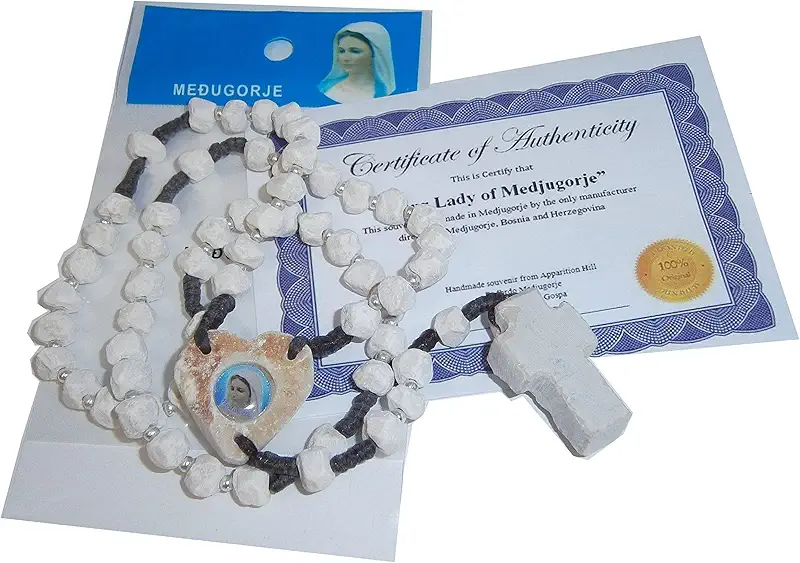
Medjugorje Jewelry
Medjugorje jewelry is not only about metal, wood, or stone. For many Catholics, it becomes a small way of carrying prayer into daily life. A bracelet on the wrist, a simple necklace, or a humble medal can gently remind us, even in busy American life, that we are not alone and that Mary quietly walks with us toward her Son.
On this page, I would like to share how different kinds of Medjugorje jewelry can fit into ordinary routines at home, at work, or on the road. I will not tell you what you should do, but simply how these items have helped me remember to pray in small, steady ways, and how they might support your own walk with the Lord.
 Let me take a look
What Makes Medjugorje Jewelry Feel Different
Many Catholics have a small drawer full of religious items: old rosaries, medals from childhood, maybe a broken chain. Medjugorje jewelry can easily become “just one more thing” in that collection. But when it is chosen and worn with intention, it can become a gentle companion in everyday faith.
The town of Medjugorje is known around the world, but most of our lives are lived far from pilgrimage sites. For me, Medjugorje jewelry is not a replacement for going to Mass or praying with Scripture. Instead, it is a quiet nudge during the day: a touch of a bracelet while waiting in line, a glance at a small cross before a meeting, or the feel of a decade ring when I cannot hold a full rosary.
One of my first pieces of Medjugorje jewelry was a simple cord bracelet with a small metal cross. I did not expect much from it. Over time, though, I realized that whenever I felt anxious or distracted, my fingers would go to that cross almost automatically. It became a small reminder to say, “Jesus, I trust in You,” or a brief Hail Mary. Nothing dramatic, just a steady return to prayer in the middle of the day.
Wearing these items does not make anyone holier, and it certainly does not guarantee any special experiences. But they can be tools that help us stay aware of God’s presence, especially when life feels scattered and loud.
Common Types of Medjugorje Jewelry and How People Use Them
Bracelets Inspired by Medjugorje
Medjugorje bracelets are probably the most common pieces people choose. Many are made of knotted cord, wood beads, or small metal medals. Some show Our Lady, others have a cross, and some simply carry a short word like “peace” or “faith.”
I like bracelets because they are easy to wear almost anywhere. When my schedule is full, a bracelet can quietly sit on my wrist without drawing attention. During a long commute or while waiting for an appointment, I sometimes slide the beads with my fingers and pray quietly, even if I cannot take out a full rosary.
Some people prefer elastic bracelets that are simple to slip on and off. Others choose adjustable cord bracelets that can be tied more snugly. Neither is better or worse; it comes down to what feels comfortable for daily life and personal style.
Necklaces, Crosses, and Medals
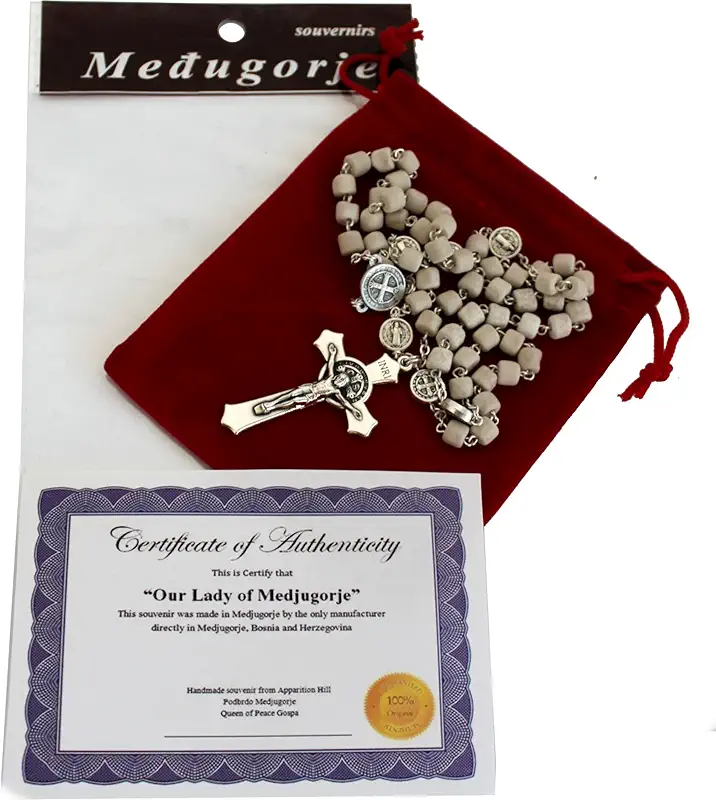
Necklaces and medals connected to Medjugorje are another quiet way people keep prayer close. A small Miraculous Medal, a cross associated with the shrine, or a medal with an image linked to Medjugorje can hang under a shirt, close to the heart.
I remember one busy season at work when I started wearing a simple Medjugorje cross under my shirt collar. Nobody else could see it, but I knew it was there. When conversations became tense or when decisions felt heavy, I would briefly touch the cross and silently ask Our Lady to keep me calm and kind.
The material—silver-colored metal, stainless steel, or wood—is less important than the intention. Many American Catholics pick something modest that will last through regular wear but does not feel showy. A sturdy chain or cord can be helpful if you plan to wear it every day.
Rings, Decade Tools, and Subtle Ways to Pray
Not everyone is comfortable wearing visible religious symbols at work or school. Medjugorje-inspired rings or small decade tools can be a very discreet way to keep prayer close without drawing attention.
A decade ring, for example, allows you to pray one decade of the Rosary using small bumps or marks instead of beads. I once kept a simple ring in my pocket during a stressful family situation. When I felt overwhelmed, I would slip my hand into my pocket, touch the ring, and slowly pray a decade without anyone noticing. It did not solve the situation, but it helped me stay grounded and more peaceful.
Some Medjugorje jewelry sets include both a bracelet and a small ring or decade piece. People often keep the ring in a wallet, purse, or car console. That way, even if you forget your rosary at home, you have a simple tool nearby to guide your prayer.
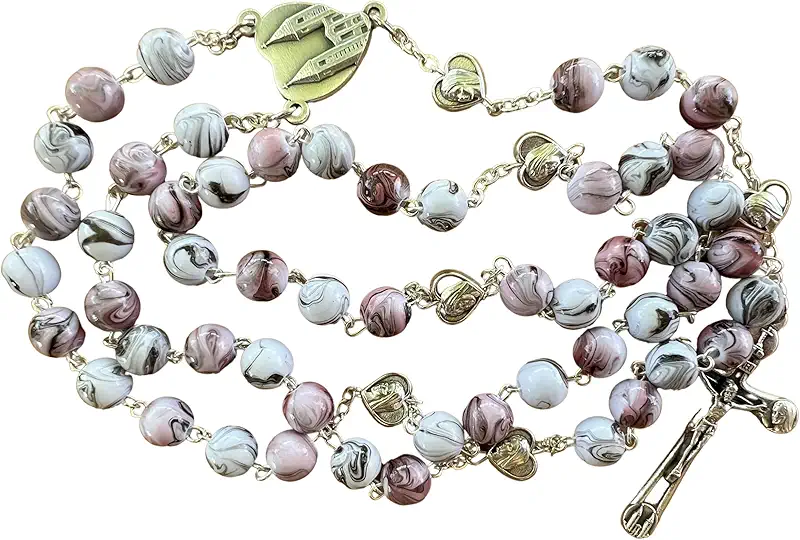
For some, this kind of jewelry becomes part of a daily rhythm: a quiet decade on the way to work, a moment of thanksgiving after receiving good news, or a prayer of trust in the middle of confusion. There is no single “right” way to use these items. They are simply tools that can support whatever habits of prayer you are already trying to live.
Bringing Medjugorje Jewelry into Everyday American Life
Life in the United States can be fast and demanding. Many of us are juggling work, family, school, and constant digital noise. A small piece of Medjugorje jewelry will not change the noise itself, but it can gently interrupt it with a reminder of God’s presence.
Some people like to associate their jewelry with certain moments of the day. For example, touching a bracelet when waking up and simply saying, “Lord, I give You this day.” Or at night, taking off a necklace and using that moment to thank God for three small blessings. Over time, these little rituals can anchor the day without adding complicated routines.
I once went through a time when I found it hard to pray at length. My mind kept wandering, and I felt discouraged. During that season, a modest Medjugorje bracelet helped me return to very short, honest prayers: “Help me, Lord,” “Be with my family,” “Thank You for this moment.” It did not fix everything, but it kept the conversation with God from completely fading.
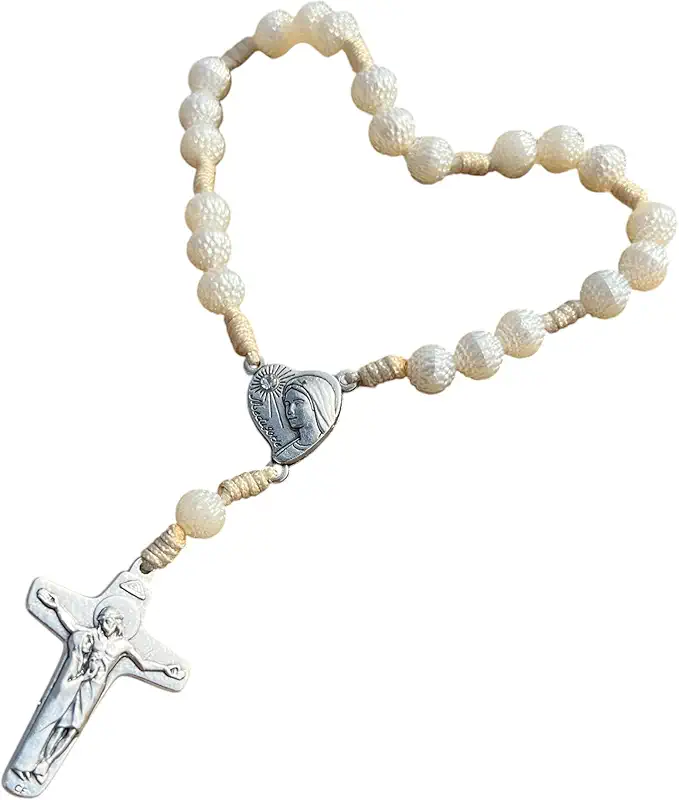
For families, some choose matching or coordinated Medjugorje bracelets as a quiet way of feeling united in prayer, even when everyone is in different places—school, work, or travel. Again, this is not about appearance, but about feeling spiritually connected through a simple shared object.
Choosing Medjugorje Jewelry with Intention, Not Pressure
When looking at different options online, it is easy to feel overwhelmed by the variety of styles, colors, and designs. It may help to pause and ask a simple question: “How do I honestly hope to use this in my daily life?” That question alone can guide your choice more than any trend or review.
If you prefer very simple, understated items, a small wooden cross or a plain metal medal might feel right. If you like color and texture, a knotted cord bracelet with different beads can reflect your personality while still pointing your heart toward prayer. There is room for both approaches in the Church.
I personally tend to choose pieces that are sturdy and quiet. I do not want to worry about breaking something fragile during ordinary tasks like cooking, cleaning, or typing. A solid cord and a modest medal are usually enough for me. Over the years, I have noticed that the simpler pieces are the ones I actually wear day after day.
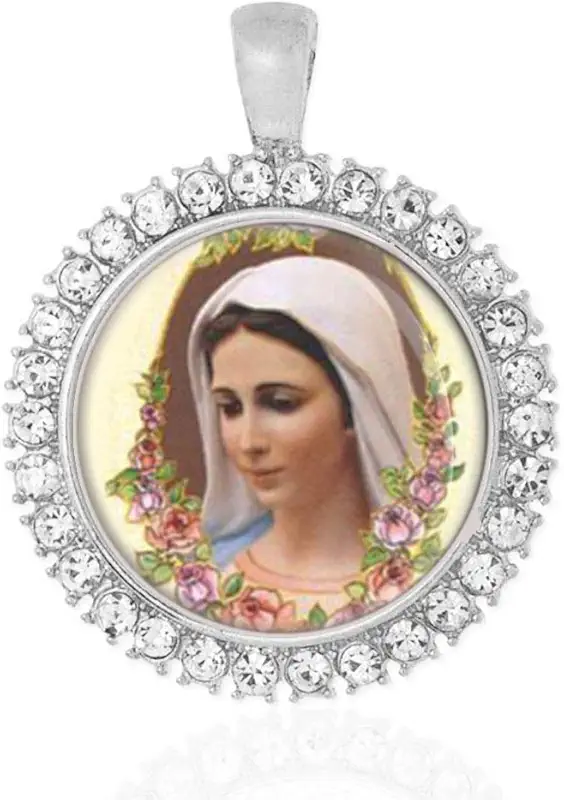
It is also perfectly fine to own just one or two meaningful pieces rather than many. Sometimes less is more. A single bracelet or necklace that you reach for regularly may serve you better than a box of things you rarely touch.
Caring for Medjugorje Jewelry with Respect
Because Medjugorje jewelry often carries sacred images—crosses, Our Lady, or saints—it deserves a certain respect. That does not mean you must treat it as fragile or untouchable. It does mean being mindful of where you leave it and how you handle it.
Many Catholics keep their jewelry on a small dish, in a fabric pouch, or on a dresser near a crucifix or holy image. Some place it near their Bible or prayer corner at night. These little choices can quietly express the value we place on what the jewelry represents.
On a practical level, it helps to remove bracelets or necklaces before activities that might damage them—rough sports, heavy cleaning with chemicals, or long exposure to water. Wiping metal pieces gently with a soft cloth from time to time can keep them looking clean without much effort.

If a piece breaks, some people like to repair it or repurpose the parts—using the medal on a new chain, or turning loose beads into a small chaplet. Others gently dispose of broken items in a respectful way, such as burying or burning, following traditional Catholic practice. There is quiet dignity even in how we let go of worn-out devotional items.
Personal Moments with Medjugorje Jewelry
Over the years, Medjugorje jewelry has accompanied me in very ordinary moments. I remember driving home late at night after visiting a sick relative, fingers resting on a simple Medjugorje bracelet on the steering wheel. I did not have the energy for long prayers, but that small contact helped me whisper, “Stay with us, Lord,” as I drove through the dark.
Another time, during a season of uncertainty about work, I wore a small Medjugorje cross every day. It reminded me to place my future in God’s hands, even when spreadsheets and emails filled most of my hours. Touching the cross during the day became a quiet act of trust: not dramatic, not emotional, just steady.
None of these moments were spectacular. But they were real. And I think many Catholics experience similar things: a calm that comes from holding a medal during a tense phone call, a sense of being accompanied while sitting alone in a waiting room, a bit of courage before a difficult conversation.
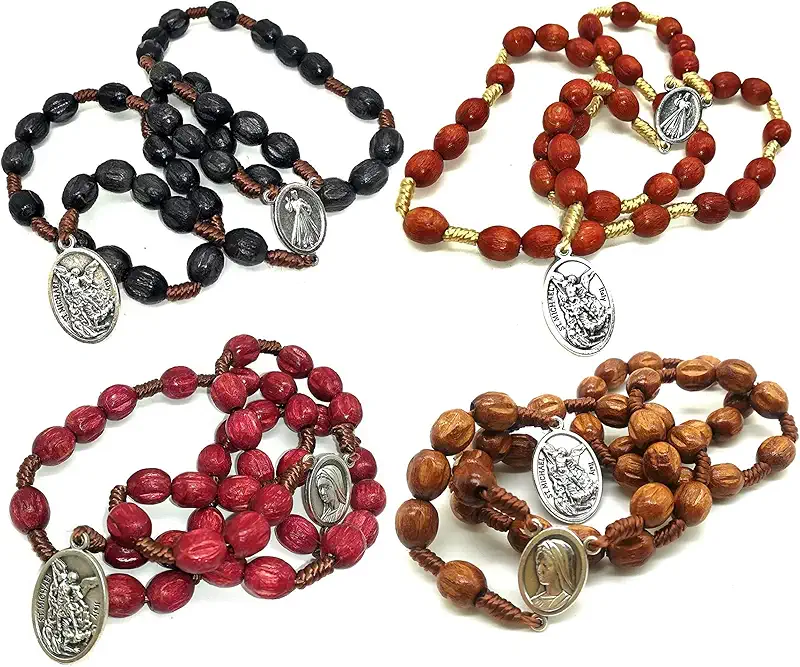
Medjugorje jewelry is not a shortcut to holiness or a guarantee of peace. But it can quietly hold our intentions: for our families, for our parishes, for the Church, and for the world. When chosen and used with a sincere heart, it can help us remember that we are always in God’s presence, even in the most ordinary tasks of the day.
Frequently Asked Questions about Medjugorje Jewelry
No. Many Catholics who wear Medjugorje jewelry have never been there in person. For them, the jewelry is a way of feeling spiritually close to a place where many people go to pray and seek conversion of heart. Whether or not you have visited, you can still use these items as reminders to turn your thoughts toward God and Our Lady during the day.
The simplest way is to connect the jewelry with short, sincere prayers. For example, each time you notice your bracelet, you might quietly say, “Mary, walk with me,” or “Jesus, I trust in You.” You can also use beads or rings to guide a decade of the Rosary during a commute, a walk, or a quiet moment at home. There is no strict rule; the goal is to let the jewelry gently nudge you back toward prayer.
In general, it is not disrespectful to wear Medjugorje jewelry in ordinary daily activities, as long as you treat it with basic care and modesty. Many people find it helpful to keep these items with them throughout the day, including at work. For intense sports or activities that might damage the jewelry, you may want to remove it temporarily and place it somewhere safe, both to protect the item and to avoid unintentional disrespect.
If possible, you can repair or reuse parts of it—for example, moving a medal to a new chain or adding beads to a rosary. If it cannot be fixed, many Catholics prefer not to throw religious items directly into the trash. Instead, they may burn or bury them in a respectful way. If you are unsure, you can ask a local parish for guidance on how they usually handle worn-out devotional objects.
A helpful approach is to think less about style alone and more about how you actually live your days. If you work with your hands, you might prefer a sturdy bracelet. If you like something close to your heart, a simple necklace or medal might feel best. Ask yourself what you are drawn to in a calm, honest way, without pressure or hurry. The piece that quietly “feels like you” will likely be the one you use most in your prayer life.