What a Medjugorje Statue Can Mean at Home
When I first brought a Medjugorje statue into my home, I did not think of it as an object to collect. It felt more like bringing home a quiet memory from a place of prayer. For many Catholics, a statue from Medjugorje becomes a steady reminder of Our Lady’s gentle presence and of the call to live simply, pray deeply, and trust more.
A Medjugorje statue is usually associated with the apparitions reported in a small village in Bosnia and Herzegovina. Over the years, countless pilgrims have gone there, stood on the rocky hills, and carried home a statue as a sign of what they experienced: silence, confession, the rosary, and a renewed desire for conversion. Whether someone has been there in person or not, a statue from that place can still serve as a gentle invitation toward the same spirit of prayer.
In my own home, I noticed that once the statue had a place, my habits slowly shifted. I found myself pausing in front of it before leaving for work, or lighting a candle in the evening. The statue did not change my life overnight, and I would never claim anything like that. But it helped create a space where prayer felt a little more natural and a little less rushed.
Choosing a Medjugorje Statue With Intention
There are many ways a Medjugorje statue can look: simple white resin, finely carved wood, hand-painted plaster, or more detailed designs with gold accents. None of these is “better” in a spiritual sense. What matters most is whether the statue leads you to silence, to reverence, and to a more honest conversation with God.
When I look for a new Marian statue, including one from Medjugorje, I usually ask myself a few quiet questions:
- Does her face encourage me to slow down and trust?
- Is the style respectful, simple, and not overly dramatic?
- Will this statue fit naturally into my home, or will it feel out of place?
- Is it sturdy enough to be handled gently but regularly, especially if children are present?
Thinking this way keeps the focus on prayer rather than on decoration. A Medjugorje statue does not need to be large or expensive. A small, humble piece on a bookshelf or bedside table can be enough to nudge the heart toward a Hail Mary during a busy afternoon.
Placing a Medjugorje Statue in Your Home
Many Catholic families like to create a simple “prayer corner” at home. A Medjugorje statue can naturally become the center of that space. It might be on a small table with a Bible, a rosary, and a candle, or on a shelf near the front door, where you see it each time you leave and return.
In our house, the first Medjugorje statue we had was placed on a small wooden shelf halfway down the hallway. It was not dramatic or in the spotlight. We simply walked past it all day long. Over time, that spot became the place where we paused before heading out, especially on difficult mornings. A quick sign of the cross there became part of our routine.
Some people prefer to keep a statue in the living room so visitors immediately notice that this is a Catholic home. Others prefer a more hidden place, like a bedroom or a quiet corner, where the statue is more for personal prayer than for display. There is no single right way. The best place is wherever you are most likely to stop, breathe, and lift your heart for even a brief moment.
Daily Prayer Habits Around a Medjugorje Statue
A Medjugorje statue does not perform prayer for us. It simply stands there, steady and silent, while we bring our struggles, joys, and questions before God. But that silent presence can encourage a few simple habits that slowly shape daily life.
Some families say one decade of the rosary in front of the statue before bed. Others gather there only once a week, maybe on Sunday evenings, to thank God for the week and entrust the next one to Our Lady’s care. For those who live alone, the statue can become a quiet companion during a few minutes of reflection at the end of the day.
I remember a time when things were heavy at work and in my family. I found myself standing in front of our Medjugorje statue late at night, just holding the rosary and not saying much. The statue obviously did not solve anything. But somehow, standing there helped me admit my worries honestly to God. That honesty was already a kind of prayer.
No one needs complicated rituals to pray before a statue. A simple sign of the cross, a short “Jesus, I trust in You,” or a quiet Hail Mary can be enough. Over months and years, these little gestures form a path where we meet the Lord again and again in the middle of ordinary life.
Different Styles of Medjugorje Statues
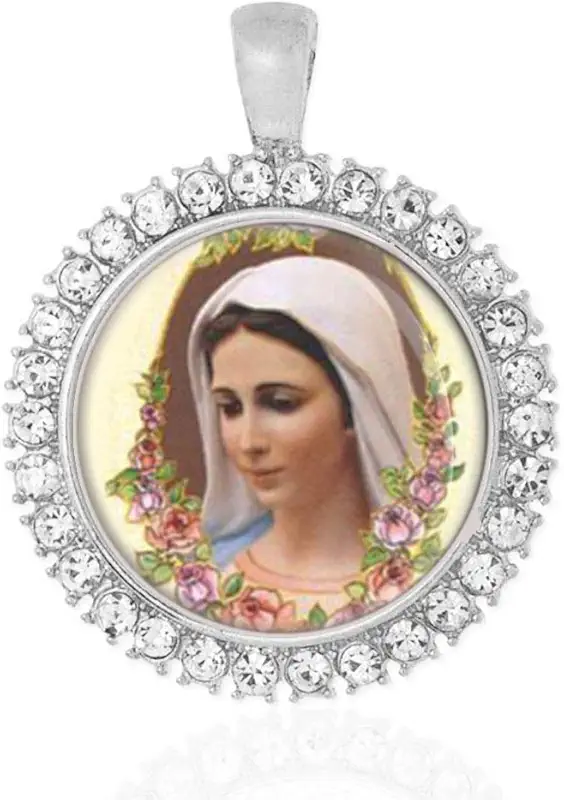
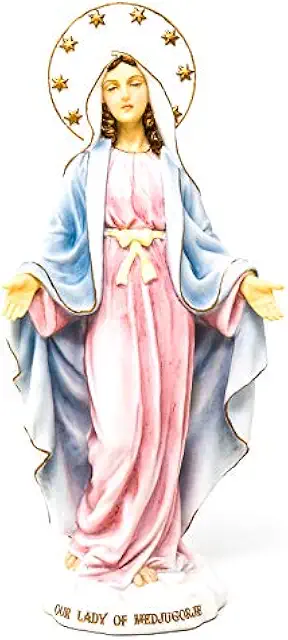
If you look for a Medjugorje statue online, you will see many different designs. Some statues show Our Lady in a white veil and simple dress, hands folded in prayer. Others include the rocky hill of Podbrdo beneath her feet. Some are very smooth and polished; others have more detail in the folds of her garments and her facial features.
Here are a few common types you might come across:
- Small bedside statues: Often made of resin or stone-like material, quiet and easy to place on a nightstand.
- Classic white outdoor statues: Designed for gardens or yards, sometimes weather-resistant, inviting neighbors and visitors to a moment of peace.
- Hand-painted indoor statues: With delicate colors that highlight her face and robes, usually better suited for a prayer corner or living room shelf.
- Wooden carved statues: Less common but deeply traditional, often appreciated for their warmth and natural look.
The variety of styles means each Catholic home can find something that feels natural. The point is not to impress but to create a space where faith, however small or fragile it may feel, can breathe.