

The quiet meaning of Medjugorje wooden rosaries
There is something very down-to-earth about wooden rosary beads, especially when they come from a place of prayer like Medjugorje. They feel humble in the hand, warm instead of cold, and they age along with us. The wood slowly takes on the mark of our fingers, our pockets, and all the moments when we reach for them without even thinking.
For many American Catholics, traveling to Medjugorje is not realistic. Work, family, and finances often make long pilgrimages impossible. Yet holding Medjugorje Wooden Rosary Beads can be a small way of joining that stream of prayer that has been flowing there for decades. The beads themselves do not change our lives, but they can gently remind us to pause, to breathe, and to turn our hearts toward God and Our Lady.
My first Medjugorje rosary was a simple wooden one that a friend brought back for me. It was not perfect: one bead had a tiny crack, and the crucifix was a bit scratched. But over time, I realized that its imperfections helped me. It felt like a rosary that had already traveled, already been prayed with. When I was going through a difficult season at work, I kept it in my car and prayed a decade in the parking lot before going in. That small habit did not fix everything, but it grounded my mornings in a quiet way.
How wooden Medjugorje rosaries fit into everyday Catholic life
A wooden rosary from Medjugorje does not have to be reserved for special moments. It can be a very ordinary part of daily life. Some people keep one by the bedside for a short night prayer. Others place it on the kitchen table, next to a candle or a small icon, where it is easy to see and reach for between chores. Parents sometimes hang a sturdy wooden rosary on a bedpost so children can see that prayer is part of the family’s routine, like brushing teeth or saying goodnight.
Because wooden beads are usually light and less fragile than glass or crystal, they work well as a “carry everywhere” rosary. You can slip one into a coat pocket during winter walks, or keep it in your backpack or purse without worrying too much about damage. When life feels scattered, that little weight of wood can remind you that you are not walking alone, even if the prayers you manage are short and sometimes distracted.
One of the things I appreciate about my own Medjugorje wooden rosary is how quiet it feels. The beads make almost no sound when they move. On crowded buses or in waiting rooms, I can run the beads through my fingers without drawing attention. More than once, while waiting for a medical appointment, I have simply held the crucifix of that rosary and silently told the Lord what I was worried about. The rosary did not give me all the answers, but the act of holding it helped me show up to that moment with a bit more peace.
Simple features to notice in Medjugorje wooden rosary beads
When people look at Medjugorje wooden rosaries online, they sometimes focus on looks alone. But for daily prayer, a few simple features can make a difference in how naturally the rosary fits into your life:
- Bead size: Smaller beads feel discreet in the hand, while slightly larger beads are easier to grasp, especially for older hands.
- Wood type and finish: Some rosaries use darker wood with a rich, smooth finish; others choose lighter tones that show more grain and texture.
- Cord or chain: Corded rosaries can feel softer and often tangle less; metal chains feel traditional but may be more delicate.
- Centerpiece: Many Medjugorje rosaries include an image of Our Lady or the church there, gently connecting your prayer to that place.
- Crucifix style: Straight, simple crucifixes are often easier to hold during personal prayer, especially in moments of stress.
None of these details are about appearance alone. They quietly shape how often you reach for the rosary and whether it feels natural to keep using it day after day. Over time, the beads you choose become familiar, like a well-used prayer book or a favorite chair.
Holding Medjugorje in your hands when you cannot travel
Many of us have heard stories about Medjugorje from friends, parish talks, or parish missions. Whether or not someone has strong opinions about it, there is no denying that many people have gone there intending to pray, confess, and begin again. For those of us who have never set foot there, handling Medjugorje wooden rosaries can simply be a way to remember that faith is alive in many corners of the world, far beyond our local parish.
When I hold my own Medjugorje Wooden Rosary Beads, I sometimes think of people praying in different time zones: families on pilgrimage, older parishioners at early morning Mass, young people praying a decade on a hill, or someone sitting alone in their apartment with a rosary after a long day. In a quiet and hidden way, the simple wood reminds me that I am part of something larger than my own concerns.
There was a season when I was caring for a relative who was very sick. Those days were full of hospital visits and late-night worries. I kept my Medjugorje wooden rosary in the side pocket of my jacket, and during long hallways walks I would thumb one bead at a time, sometimes not even finishing a decade. I never had a dramatic moment of consolation, but looking back, I notice that the habit kept me connected with God and with Our Lady in the middle of a very human, very fragile time.
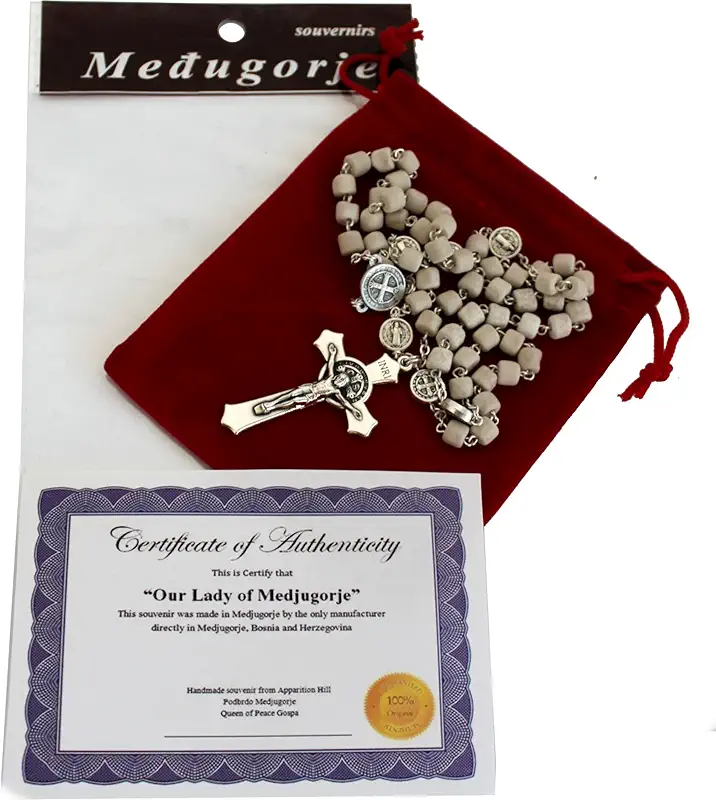
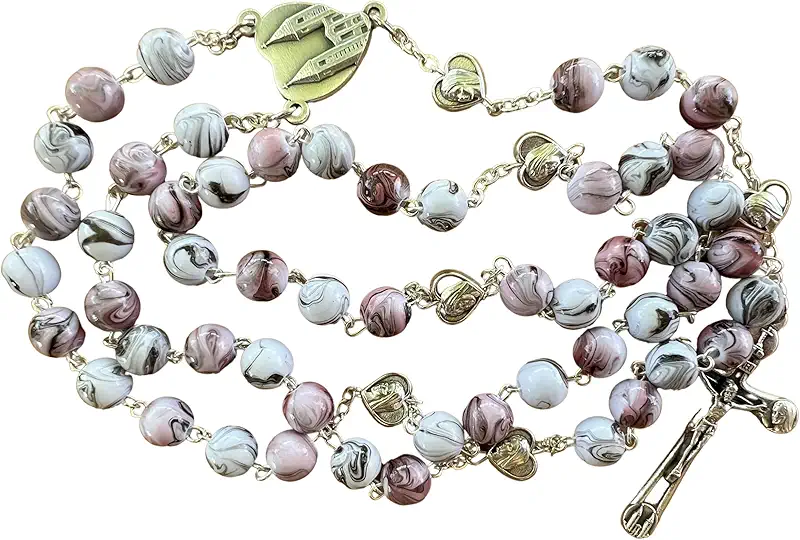
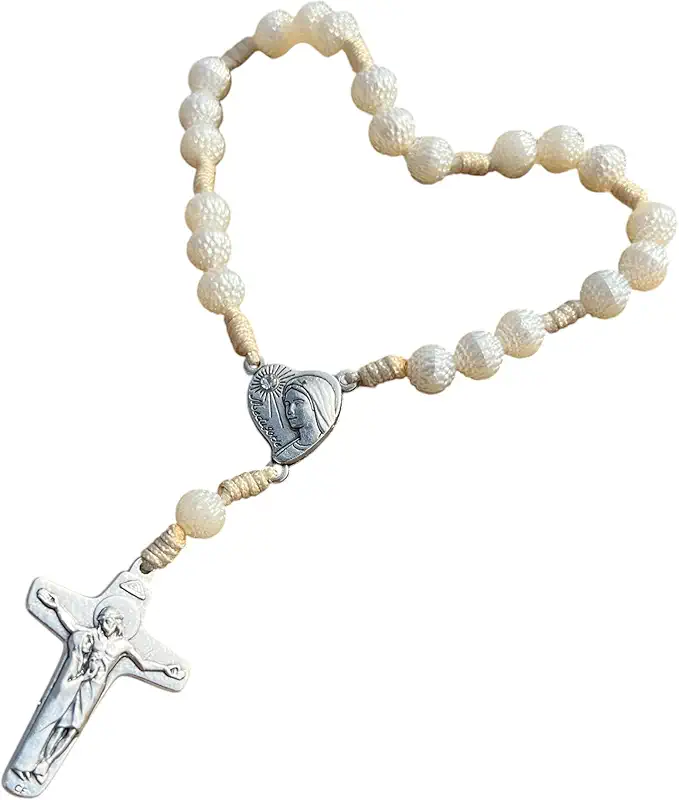
Ways to pray with Medjugorje Wooden Rosary Beads
A rosary from Medjugorje does not require special prayers. It can be used in exactly the same way as any other rosary. What may change is your intention, the quiet desire with which you pick it up. Here are a few gentle ways people often fold these beads into daily life:
- Short decades throughout the day: Instead of waiting for one long block of time, you can pray a single decade in the morning, another at lunch, and so on.
- Evening gratitude: Holding the wooden beads while recalling three things you are grateful for at the end of the day can soften the heart before sleep.
- Silent prayer when words are hard: In moments of grief or anxiety, simply holding the crucifix or a single bead can be a prayer without words.
- Family rhythm: Some families choose one evening a week to pray one or two decades together, letting each person hold part of the rosary.
- Walking prayer: A quiet walk with the rosary in your pocket, praying as your feet move, can gently link body and soul.
I have found that when I keep a Medjugorje wooden rosary near me, I do not always manage a full set of mysteries. But the beads still do their work, in a way: they remind me that prayer is not about perfection, but about returning again and again, even with very small efforts.
Caring for your wooden beads over time
Wood responds to touch, temperature, and humidity. That is part of its beauty. Over months and years, your Medjugorje Wooden Rosary Beads will change slightly. The beads may become smoother where your fingers rest again and again. The cord may soften. The crucifix may show faint signs of wear. Instead of seeing this as damage, many people see it as a record of prayer, almost like a journal written in texture instead of words.
To keep wooden beads in good condition, it helps to:
- Keep them out of standing water and very damp places.
- Avoid harsh cleaners; a soft dry cloth is usually enough.
- Store them gently when not in use—on a hook, in a small pouch, or near a prayer corner.
- Handle them often; the natural oils from your hands can actually help keep the wood smooth.
I once accidentally left my Medjugorje wooden rosary in a jacket that went through the washing machine. I felt awful when I found it, tangled and damp. I dried it gently with a towel and laid it flat overnight. The next day it looked a little different, but still sound. In the end, I decided to keep using it. Somehow, its survival through that small accident made it feel even more like part of my real, messy life.